Select Language
In environments where flammable gases, vapors, combustible dust, or sensitive electronic components are present, static electricity is more than a nuisance—it's a hazard. A rolling caster can generate thousands of volts of electrostatic charge through triboelectric effect, and without a safe discharge path, that charge can ignite an explosion or destroy static-sensitive circuitry. Conductive casters are engineered to continuously dissipate electrostatic discharge (ESD) safely to ground, preventing spark formation during movement.
At China Zhongshan FFIBU Casters Co., Ltd, the FFIBU brand develops conductive and ESD-protective caster series specifically for hazardous locations (HAZLOC), cleanrooms, and electronics manufacturing—where uncontrolled static is not an option.
Conductive casters use a specially formulated conductive elastomer tread (typically carbon-black-loaded polyurethane or rubber) coupled with a metal-bearing raceway and electrically continuous bracket/hardware. This creates a low-resistance path from the wheel tread → wheel hub → bearings → caster yoke → mounting plate → equipment frame → ground.
The typical surface resistivity of a conductive caster wheel falls within:
Conductive: 10⁴ – 10⁶ ohms (for explosive atmosphere static dissipation)
Static Dissipative (ESD): 10⁶ – 10⁹ ohms (for electronics/cleanroom use)
Always verify the required ohm range per your facility's safety standard (NFPA 77, IEC 61340, etc.).
Feature | Benefit |
|---|---|
Continuous Static Drainage | Prevents electrostatic charge accumulation during rolling |
Spark Prevention | Reduces risk of ignition in Class I, II, or III hazardous areas |
Non-Marking Tread Options | Protects clean floors while maintaining conductivity |
Metal-to-Metal Contact Path | Ensures electrical continuity through swivel head and bearings |
Multiple Base Materials | Conductive PU, rubber, or TPR formulations available |
FFIBU conductive casters are specified in:
Explosive Atmosphere Facilities – Petrochemical plants, solvent-handling areas, paint-spray booths (where classified per applicable explosion-protection standards).
Powder Coating & Grain Handling – Combustible dust zones requiring static dissipation.
Semiconductor & Electronics Fabs – Transport of wafers, PCBs, and sensitive assemblies in ESD-protected areas.
Pharmaceutical Cleanrooms – Where both static control and hygienic design are required.
Ammunition & Pyrotechnics Handling – Munitions carts requiring spark-safe mobility.
Type | Surface Resistivity | Purpose | Typical Use |
|---|---|---|---|
Conductive | 10⁴ – 10⁶ Ω | Rapid static discharge; spark prevention in HAZLOC | Solvent areas, powder plants, ammo handling |
Static Dissipative (ESD) | 10⁶ – 10⁹ Ω | Controlled slow discharge; protect electronics | Electronics mfg., cleanrooms |
Standard (Insulating) | >10¹² Ω | No static dissipation | General-purpose, non-hazardous areas |
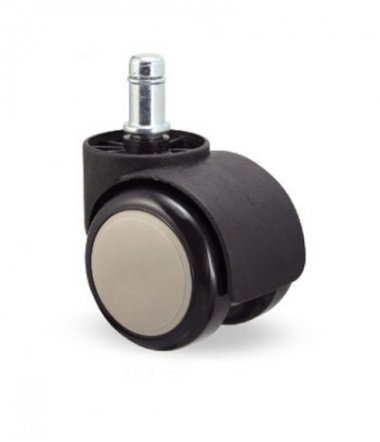
When specifying FFIBU conductive casters for explosive or ESD-sensitive environments:
Verify Resistance Range – Match to your compliance requirement (conductive vs. static-dissipative).
Ensure Grounding Continuity – Equipment frame and floor must also be grounded; test resistance from wheel tread to ground after installation.
Load Rating – Conductive treads have load limits comparable to standard PU/rubber of same size.
Floor Condition – Smooth, non-insulating floors give best grounding contact.
Environmental Factors – Select chemical-resistant tread formulation if exposed to oils, solvents, or cleaning agents.
Regular Testing – Periodically measure wheel-to-ground resistance to confirm continued conductivity.
Use conductive mounting hardware and ensure metal-to-metal contact between caster plate and equipment chassis—paint or powder coating at the mounting interface can interrupt continuity.
Ground the equipment frame to earth via an approved grounding strap or conductor where required.
Do not substitute standard casters in hazardous locations—only use purpose-built conductive/ESD-rated models and follow your facility's explosion-protection procedures.
Engineered to safely channel static away before it becomes a problem, FFIBU conductive casters from China Zhongshan FFIBU Casters Co., Ltd provide peace of mind in the world's most charge-sensitive workplaces—keeping operations safe, compliant, and moving freely in environments where a single spark is one too many.
 中文简体
中文简体  English
  Español
  العربية
  Français
  Русский
  Português
  Deutsch
  日本語
日本語  한국어
한국어  Tiếng Việt
  हिन्दी
  Italiano
  Nederlands
  Türkçe
  Polski
  ไทย
ไทย  Română
  বাংলা
বাংলা  Українська
  עברית
עברית  Lietuvių
  Bahasa Indonesia
  Svenska
  Magyar
  Dansk
Dansk  Suomi
Suomi  Čeština
  Ελληνικά