Select Language
Not all caster wheels are created equal. One of the most important factors to consider before purchasing is the duty level—light, medium, or heavy duty. Choosing the correct classification ensures safe operation, prolongs equipment life, and prevents unnecessary caster failure. Here’s how they differ and where each type fits best.
Typical Load Capacity: Up to approx. 50–75 kg (110–165 lbs) per caster
Light duty casters are designed for small, manually moved equipment such as:
Office chairs & filing cabinets
Small trolleys in shops or cafés
Lightweight display stands
They usually feature thinner steel brackets, smaller wheel diameters (e.g., 2"–4"), and plain or basic ball bearings. While economical, they are not intended for rough floors or continuous industrial use.
China Zhongshan FFIBU Casters Co., Ltd produces light duty series under the FFIBU brand that focus on smooth rolling and floor protection in low-load applications.
Typical Load Capacity: Approx. 80–150 kg (175–330 lbs) per caster
Medium duty casters bridge the gap between everyday furniture wheels and full industrial castors. Common applications include:
Hospital carts & mobile workstations
Warehouse picking trolleys
Bakery racks & light machinery
These models typically have double-ball race swivel heads, reinforced steel yokes, and precision ball or roller bearings for improved maneuverability under moderate loads.
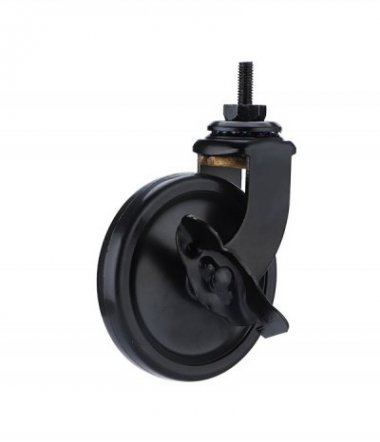
FFIBU medium duty solutions are engineered with hardened raceways and carefully selected wheel compounds to balance load capacity with quiet, low-effort movement.
Typical Load Capacity: 150 kg up to several hundred kilograms per caster
Heavy duty casters are built for demanding industrial environments:
Automotive assembly lines
Mold & die carts
Large platform trucks & AGVs
They feature thick-gauge forged or pressed steel frames, large diameter wheels (4"–12"+), tapered roller or double ball bearings, and heat-treated kingpins. These casters are designed to withstand impact, continuous rolling, and harsh conditions.
From the workshop of China Zhongshan FFIBU Casters Co., Ltd, the FFIBU heavy duty range emphasizes structural strength, secure dual-lock options, and compound choices—such as high-performance polyurethane—that protect both the caster and the floor.
Total Load ÷ Number of Casters = Minimum Required Capacity per Caster
(Add a 20–30% safety margin above your calculated need.)
Match the duty level to floor condition, travel distance, and frequency of use, not just static weight.
When in doubt, consult the technical data provided by experienced manufacturers like China Zhongshan FFIBU Casters Co., Ltd.
Understanding the difference between light, medium, and heavy duty casters helps you specify the right product the first time—reducing downtime, improving safety, and controlling long-term cost. With the FFIBU brand’s complete lineup across all three categories, matching the correct caster to your application becomes a straightforward, confident decision.
 中文简体
中文简体  English
  Español
  العربية
  Français
  Русский
  Português
  Deutsch
  日本語
日本語  한국어
한국어  Tiếng Việt
  हिन्दी
  Italiano
  Nederlands
  Türkçe
  Polski
  ไทย
ไทย  Română
  বাংলা
বাংলা  Українська
  עברית
עברית  Lietuvių
  Bahasa Indonesia
  Svenska
  Magyar
  Dansk
Dansk  Suomi
Suomi  Čeština
  Ελληνικά