Select Language
In healthcare, casters are critical safety components. They must support heavy loads, roll silently, and withstand aggressive disinfection without failing.
Patient beds require casters that balance easy transport with absolute stability during transfers.
Wheel Size: 5" or 6" is the industry standard. Larger diameters roll over obstacles easier, while smaller ones offer greater stability.
Material: Medical-grade Polyurethane (PU) or TPR provides a soft, quiet roll that protects floors.
Braking: Individual wheel brakes are common, but central locking systems are preferred for rapid immobilization.
Hygiene: Look for sealed bearings and smooth profiles to prevent debris buildup.
Carts for medication, anesthesia, or crash response need precise handling to reduce nurse fatigue.
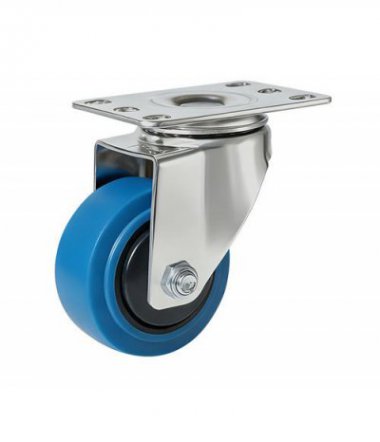
Configuration: A mix of two swivel and two rigid casters improves straight-line tracking during emergencies.
Height: Taller casters improve ergonomics but raise the center of gravity; designers must balance push effort with tip-over risk.
Control: Directional locks help navigate long corridors, while Total Locks secure the cart during procedures.
China Zhongshan FFIBU Casters Co., Ltd engineers medical mobility solutions that meet the rigorous demands of modern healthcare facilities.
Quiet Operation: FFIBU medical casters utilize soft treads and precision bearings to minimize noise, preserving the calm environment needed for patient recovery.
Hygienic Design: Featuring sealed housings and corrosion-resistant materials, FFIBU casters withstand frequent washdowns and harsh disinfectants without degrading.
Reliable Safety: With robust brake options and high load capacities, FFIBU ensures equipment stays exactly where it belongs—safe and stable.
By integrating FFIBU casters, manufacturers deliver equipment that moves smoothly, cleans easily, and performs reliably when it matters most.
 中文简体
中文简体  English
  Español
  العربية
  Français
  Русский
  Português
  Deutsch
  日本語
日本語  한국어
한국어  Tiếng Việt
  हिन्दी
  Italiano
  Nederlands
  Türkçe
  Polski
  ไทย
ไทย  Română
  বাংলা
বাংলা  Українська
  עברית
עברית  Lietuvių
  Bahasa Indonesia
  Svenska
  Magyar
  Dansk
Dansk  Suomi
Suomi  Čeština
  Ελληνικά