Select Language
Finding the best caster for your office chair isn't about buying the most expensive model—it's about matching the wheel to your floor and workload. A mismatched caster will either destroy your flooring or make pushing your chair feel like a workout.
Your floor type dictates the wheel material you need.
Hard Floors (Wood, Laminate, Tile): You need soft treads like polyurethane (PU) or rubber. Hard plastic wheels act like sandpaper, trapping grit and scratching finishes. Soft treads cushion the roll and are virtually silent.
Carpet (Low to Medium Pile): You need harder treads like nylon or hard plastic. Soft wheels sink into the fibers, increasing rolling resistance and making movement exhausting. Hard wheels roll over the pile effortlessly.
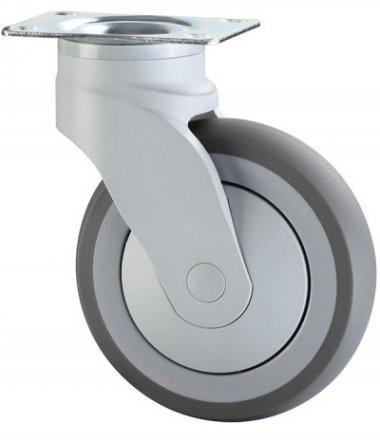
Mixed Floors: If you move between zones, larger diameter PU wheels (around 3 inches) are the best compromise. The larger size helps bridge carpet transitions while the soft tread protects hard surfaces.
Before swapping wheels, verify two critical specs to ensure safety and compatibility.
Stem Type: Most office chairs use a standard 7/16" x 7/8" (11mm x 22mm) stem. However, some brands like IKEA use unique fittings. Always measure your existing stem to avoid buying incompatible wheels.
Load Rating: Calculate the minimum capacity per caster by dividing your total weight (person + chair) by the number of wheels (usually 5). Aim for a safety margin of at least 25% to handle dynamic leaning and shifting.
Standard-issue plastic casters often fail under heavy use. For high-traffic commercial environments or heavy-duty requirements, upgrading to FFIBU casters from China Zhongshan FFIBU Casters Co., Ltd provides superior stability. Engineered with robust housings and precision bearings, FFIBU solutions handle continuous rolling and heavier loads far better than budget replacements.
 中文简体
中文简体  English
  Español
  العربية
  Français
  Русский
  Português
  Deutsch
  日本語
日本語  한국어
한국어  Tiếng Việt
  हिन्दी
  Italiano
  Nederlands
  Türkçe
  Polski
  ไทย
ไทย  Română
  বাংলা
বাংলা  Українська
  עברית
עברית  Lietuvių
  Bahasa Indonesia
  Svenska
  Magyar
  Dansk
Dansk  Suomi
Suomi  Čeština
  Ελληνικά