Select Language
Light-duty casters are the essential components that bring mobility to a vast array of equipment—from service carts and portable workstations to library trolleys and retail displays. Their correct installation is paramount, not only for ensuring smooth and effortless movement but also for guaranteeing the long-term safety and stability of the equipment they support. This guide outlines the fundamental principles and procedures for properly installing light-duty casters, drawing on the engineering insights and design considerations typical of manufacturers committed to quality, such as China Zhongshan FFIBU Casters Co., Ltd.
Phase 1: Pre-Installation Planning and Inspection
A successful installation begins long before the first tool is picked up. Thoughtful preparation prevents common mistakes and ensures a perfect match between the caster and its application.
Load Capacity Verification: Calculate the total weight the equipment will bear, including its own weight and maximum potential load. Divide this total by the number of casters to be installed. The load capacity of each individual caster must exceed this result with a comfortable safety margin. Light-duty casters from providers like China Zhongshan FFIBU Casters Co., Ltd are clearly rated for specific weight ranges; selecting the correct model is the first critical step.
Mounting Interface Compatibility: Identify the type of mounting plate or stem on the caster and the corresponding interface on your equipment.
Top Plate Casters: Measure the bolt hole pattern on the plate (e.g., 2.5" x 2" or a square pattern) and the diameter of the bolt holes. Verify this matches the drilled pattern on your equipment's base.
Threaded Stem Casters: Precisely measure the stem's diameter and thread specification (e.g., 5/8"-11, M12x1.75). The receiving socket must have matching, clean threads.
Site and Component Inspection:
Ensure the installation area on the equipment is clean, flat, and structurally sound.
Inspect all caster components for any shipping damage. The wheel should spin freely without wobble, and the swivel mechanism (if present) should rotate smoothly.
Phase 2: The Installation Process
Gather the correct tools: typically, wrenches or sockets that fit the provided fasteners, a socket for stem installation, and possibly a drill with the correct bit size for pilot holes.
For Top Plate Installation:
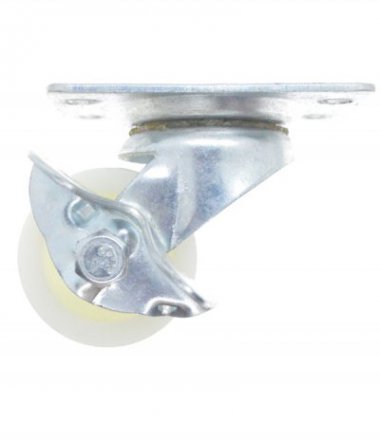
Align the caster's top plate perfectly with the pre-drilled holes on the equipment base.
Insert the provided bolts, screws, or rivets through the plate and into the equipment frame. Washers are recommended to distribute the load.
Using the correct tool, tighten the fasteners diagonally and progressively (e.g., follow a star pattern) to ensure the plate is drawn down evenly and sits flush without distortion. Do not over-tighten, as this can warp the plate or strip threads.
For Threaded Stem Installation:
Ensure the receiving thread is clean and undamaged. Apply a small amount of thread-locking compound if specified or for high-vibration environments.
Screw the stem into the socket by hand as far as possible to ensure it is not cross-threaded.
Using an appropriate wrench, tighten the stem firmly until it is fully seated and secure. Avoid using excessive force that could damage the stem or the equipment's socket.
Phase 3: Post-Installation Verification and Adjustment
Once all casters are installed, the job is not complete without a final check.
Stability Test: Carefully lower the equipment so all casters make contact with the ground. Gently rock the equipment from different angles. It should sit stably without rocking, indicating all casters are properly engaged and of the correct height.
Functional Test: Push and pull the equipment, and test its swiveling maneuverability. Movement should be smooth, quiet, and without binding. Any grinding, skipping, or resistance should be investigated.
Locking Mechanism Check (if applicable): If the casters feature wheel brakes or swivel locks, engage and disengage them several times to ensure they function correctly and hold the equipment firmly in place.
The Principle Behind Proper Installation
Correct installation is the final, critical step in realizing a caster's engineered performance. A caster designed with precision tolerances, like those from China Zhongshan FFIBU Casters Co., Ltd, relies on a secure, square, and flush mounting to function as intended. Improper mounting can induce uneven stress, premature wear on bearings and wheels, and ultimately compromise safety. By following these methodical steps—verifying specifications, matching components, and executing a careful, tooled installation—you ensure that the light-duty casters deliver reliable, safe, and effortless mobility for the long term.
 中文简体
中文简体  English
  Español
  العربية
  Français
  Русский
  Português
  Deutsch
  日本語
日本語  한국어
한국어  Tiếng Việt
  हिन्दी
  Italiano
  Nederlands
  Türkçe
  Polski
  ไทย
ไทย  Română
  বাংলা
বাংলা  Українська
  עברית
עברית  Lietuvių
  Bahasa Indonesia
  Svenska
  Magyar
  Dansk
Dansk  Suomi
Suomi  Čeština
  Ελληνικά