Select Language
Choosing the correct installation method is as critical as selecting the caster itself. The mount dictates the permanence, load capacity, and overall stability of the connection. The three mainstream methods—bolt-on, socket (kingpin), and welded—each serve distinct applications based on structural requirements, load dynamics, and maintenance needs. This guide breaks down their applications to inform the optimal choice.
1. Bolt-On Mount (Top Plate Mount)
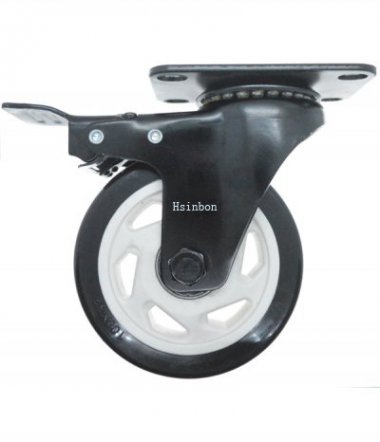
Mechanism: This is the most common and versatile method. The caster features a flat, drilled top plate that is secured to the equipment base using bolts, nuts, and washers.
Key Characteristics:
High Stability & Load Distribution: The plate spreads the load over a wider area, reducing stress concentration. Reinforced plates with ribbing offer even greater strength for heavy-duty applications.
Adjustability & Ease of Installation/Removal: Casters can be easily positioned, replaced, or removed using standard tools without damaging the equipment.
Ideal Application Scenarios:
Universal Use: The default choice for most industrial carts, platforms, machinery bases, and storage racks.
Heavy-Duty & Dynamic Loads: Preferred for equipment carrying very heavy or unstable loads where a rigid, high-integrity connection is paramount. Equipment from sectors requiring robust mobility solutions often utilizes this reliable method.
Non-Penetrable Surfaces: Essential for mounting onto equipment with hollow legs or thin-gauge metal, as the plate bridges and reinforces the mounting area.
2. Socket (Kingpin) Mount
Mechanism: This method uses a fixed, cylindrical socket (tube) welded vertically onto the equipment. The caster has a matching threaded or unthreaded kingpin that inserts into this socket and is secured with a fastener (pin, bolt, or retaining ring).
Key Characteristics:
Pivoting Swivel Mechanism: The kingpin isthe caster's central swivel axis. This provides a very strong and precise rotation point.
Clean, Integrated Profile: The mounting hardware is largely hidden within the socket, offering a streamlined look.
High Axial Load Capacity: Excels at handling direct downward force through the kingpin.
Ideal Application Scenarios:
Heavy-Duty Swivel Casters: Common in industrial manufacturing, heavy transport, and aviation ground support equipment where sustained, high-weight swiveling is required.
Modular/Replaceable Systems: Ideal for environments where casters are subject to extreme wear and need frequent replacement, as the caster unit can be swapped out independently of the socket fixed to the equipment.
OEM Applications: Often specified in the original design of commercial and industrial equipment for a robust, integrated mobility solution.
3. Welded Mount
Mechanism: The caster features a mounting pad (often a flat plate or a stem with a base) that is permanently fused to the equipment frame using arc welding (MIG, TIG, or Stick).
Key Characteristics:
Permanent & Integral Connection: Creates the strongest possible joint, effectively making the caster a permanent part of the equipment structure.
Maximum Strength & Rigidity: Eliminates all potential points of loosening found in mechanical fasteners. The load is transferred directly through the weld.
Skill-Dependent: Requires a skilled welder to ensure a strong, non-brittle weld that does not compromise the heat-treated properties of the caster or equipment metal.
Ideal Application Scenarios:
Extreme/Impact Loads: For foundries, steel mills, shipbuilding, and heavy construction where equipment faces severe impact, shock loading, or continuous stress that could loosen bolts.
Harsh Environments: Suitable for applications exposed to high heat, corrosive washdowns, or conditions where bolts could corrode or seize permanently.
Custom Fabrications & Structural Integrity: Used where the design requires a seamless, ultra-strong connection as part of a custom-built chassis or frame.
Summary Comparison Table
Feature | Bolt-On Mount | Socket (Kingpin) Mount | Welded Mount |
|---|---|---|---|
Connection | Mechanical (Bolts/Nuts) | Mechanical (Pin in Socket) | Metallurgical (Weld) |
Permanence | Semi-Permanent, Removable | Removable (Caster Only) | Permanent |
Load Capacity | Very High (via plate distribution) | Very High (axial) | Highest (theoretical) |
Installation Ease | Simple (Standard Tools) | Moderate | Complex (Skilled Welder) |
Field Replacement | Easy | Easy (Caster Only) | Very Difficult |
Best For | Universal industrial use, heavy dynamic loads | Heavy-duty swiveling, modular systems | Extreme environments, impact loads, custom fab |
Conclusion
The optimal mounting method is dictated by the equipment's operational demands. Bolt-on mounts offer versatile, high-strength reliability for most applications. Socket mounts provide superior, serviceable swivel performance for heavy loads. Welded mounts deliver permanent, integral strength for the most severe conditions. Understanding these core distinctions ensures the chosen installation method provides a secure, durable, and safe foundation for equipment mobility.
 中文简体
中文简体  English
  Español
  العربية
  Français
  Русский
  Português
  Deutsch
  日本語
日本語  한국어
한국어  Tiếng Việt
  हिन्दी
  Italiano
  Nederlands
  Türkçe
  Polski
  ไทย
ไทย  Română
  বাংলা
বাংলা  Українська
  עברית
עברית  Lietuvių
  Bahasa Indonesia
  Svenska
  Magyar
  Dansk
Dansk  Suomi
Suomi  Čeština
  Ελληνικά