Select Language
Casters are the unsung heroes of material handling, allowing heavy equipment to glide smoothly across floors. However, like any mechanical component, they are subject to wear and tear. Proper maintenance not only extends the life of the casters but also ensures workplace safety and prevents costly downtime.
Whether you are using light-duty office chair wheels or heavy-duty industrial casters, following these maintenance tips will keep your equipment rolling efficiently.
Dirt, debris, and tangled materials are the primary enemies of smooth-rolling casters.
Remove Debris: Regularly inspect and remove hair, string, plastic wrap, and paper clips that can get wound around the axle or trapped in the swivel raceway.
Wash Wheels: For casters used in environments with sticky residues (like kitchens or factories), wash the wheels with mild soap and water. Ensure they are completely dry before putting them back into service to prevent rust on steel components.
Check the Floor: Sometimes the problem isn't the caster but the floor. Keep pathways free of obstacles like extension cords or loose debris that can jam the wheels.
Lack of lubrication is the main cause of caster failure. Friction generates heat, which degrades bearings and seals.
Swivel Raceways: Apply a high-quality, light oil or lithium-based grease to the swivel section (the top plate area) periodically. This ensures the caster can rotate 360 degrees smoothly.
Wheel Bearings: If your casters have exposed bearings, grease them according to the manufacturer's schedule. For sealed precision bearings, they are often "lubed for life," but check for signs of dryness or noise.
Avoid Over-Greasing: Too much grease can attract dust and grime, creating a grinding paste that damages the caster. Use just enough to coat the surface.
Make it a habit to visually inspect casters weekly or monthly, depending on usage intensity.
Check for Flat Spots: Wheels that sit stationary under heavy loads for long periods can develop flat spots. Rotate or replace wheels showing signs of deformity.
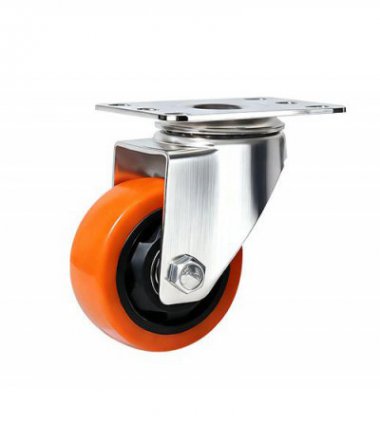
Examine the Brackets: Look for cracks, bends, or corrosion in the caster forks (yokes) and mounting plates. A bent bracket will cause the wheel to wobble and wear unevenly.
Tighten Fasteners: Check that all bolts, nuts, and rivets are secure. Loose fasteners can lead to catastrophic failure during movement.
Every caster has a specific load rating (in pounds or kilograms). This is one of the most common causes of premature failure.
Respect the Limit: Never exceed the manufacturer’s recommended load capacity. Overloading crushes bearings, deforms wheels, and cracks brackets.
Distribute Weight Evenly: Ensure the load is centered and evenly distributed across all casters on the cart or machine.
Using the wrong type of caster accelerates wear.
Floor Conditions: Avoid using hard nylon or steel wheels on delicate floors (they cause damage) or soft rubber wheels on rough outdoor terrain (they wear out quickly).
Environmental Factors: In wet or corrosive environments, use stainless steel or phenolic wheels. In cleanrooms, use non-particulating polyurethane or conductive wheels.
Even with the best maintenance, a poorly manufactured caster will fail prematurely. The quality of raw materials, the precision of the bearings, and the robustness of the welding all determine how well a caster ages.
This is why sourcing from a reputable manufacturer is the first step in long-term caster care. China FFIBU Casters Co., Ltd., established in 2002, emphasizes durability in its production process. Operating from a 30-acre facility in Zhongshan, FFIBU utilizes automated production lines and strict quality control to ensure that every caster—whether light-duty, industrial, or specialty—meets high standards for material integrity and smooth operation. Their products are designed to withstand rigorous daily use, reducing the frequency of replacements and lowering the total cost of ownership for businesses worldwide.
Caster maintenance doesn't require complex tools—just consistency. By keeping them clean, well-lubricated, and operated within their limits, you can significantly extend the service life of your casters. Remember, a small investment in maintenance today prevents major operational headaches tomorrow.
 中文简体
中文简体  English
  Español
  العربية
  Français
  Русский
  Português
  Deutsch
  日本語
日本語  한국어
한국어  Tiếng Việt
  हिन्दी
  Italiano
  Nederlands
  Türkçe
  Polski
  ไทย
ไทย  Română
  বাংলা
বাংলা  Українська
  עברית
עברית  Lietuvių
  Bahasa Indonesia
  Svenska
  Magyar
  Dansk
Dansk  Suomi
Suomi  Čeština
  Ελληνικά