Select Language
The rapid evolution of additive manufacturing has transformed 3D printing from a niche prototyping tool into a cornerstone of modern production. As the technology advances, so does the complexity and scale of the equipment required to support it. Among these critical yet often overlooked components are casters—the wheels that enable mobility, stability, and flexibility in 3D printer enclosures. For manufacturers, engineers, and makers alike, selecting the right casters is not merely about moving equipment; it’s about optimizing workflow efficiency, ensuring safety, and protecting high-precision machinery. At the forefront of this specialized field stands China Zhongshan FFIBU Casters Co., Ltd, a company dedicated to engineering mobility solutions tailored specifically for the demanding environment of 3D printing enclosures. Under the trusted brand FFIBU, the company delivers innovation where precision meets practicality.
3D printer enclosures serve multiple essential functions: they maintain stable temperature conditions, reduce noise, contain fumes, and protect prints from environmental contaminants such as dust or humidity. However, as enclosures grow larger to accommodate industrial-scale printers, their weight and footprint increase significantly. A fully equipped enclosure can weigh several hundred kilograms, especially when integrated with ventilation systems, filament dryers, and control units. Moving such heavy, sensitive equipment requires more than standard off-the-shelf wheels.
Vibrations pose one of the greatest threats to print quality. Even minor oscillations during operation can ruin fine details or cause layer-shifting errors. Therefore, casters used in these environments must offer exceptional shock absorption and vibration isolation. Additionally, many modern workshops and labs require frequent reconfiguration of their layout to adapt to new projects or workflows. Lockable, swivel casters become indispensable in such scenarios, allowing users to reposition large enclosures effortlessly while maintaining precise alignment once stationary.
Environmental factors also play a role. High temperatures inside enclosures can affect nearby components, including caster materials. Similarly, exposure to chemicals like acetone (used in vapor smoothing) or adhesives may degrade inferior wheel compounds. Thus, material selection becomes a critical consideration—one where FFIBU’s expertise shines.
Based in Zhongshan, a hub of advanced manufacturing in China, China Zhongshan FFIBU Casters Co., Ltd has built its reputation on understanding the nuanced needs of specialized industries. Unlike general-purpose caster suppliers, FFIBU focuses on application-specific design, recognizing that a wheel intended for hospital beds or warehouse carts cannot simply be repurposed for high-tech 3D printing setups.
The company’s R&D team works closely with 3D printing professionals to identify pain points and develop targeted solutions. For example, they recognized early on that traditional hard rubber wheels transmitted too much vibration to sensitive print heads. In response, FFIBU engineered a proprietary polyurethane formulation that balances load capacity with damping properties. This material absorbs micro-vibrations without sacrificing durability or floor protection—a breakthrough that has made FFIBU casters a preferred choice among professional printing facilities.
Moreover, China Zhongshan FFIBU Casters Co., Ltd emphasizes modularity and customization. Their product line includes everything from light-duty swivel casters for desktop enclosures to heavy-duty dual-wheel models capable of supporting over 800 kilograms per set. Each model is designed with specific use cases in mind, whether it’s cleanroom compatibility, anti-static requirements, or extreme temperature resistance.
What truly sets FFIBU apart is their holistic approach to caster design. Rather than treating wheels as isolated parts, they view them as integral components of a larger system. This perspective informs every aspect of development—from bearing selection to brake mechanism design.
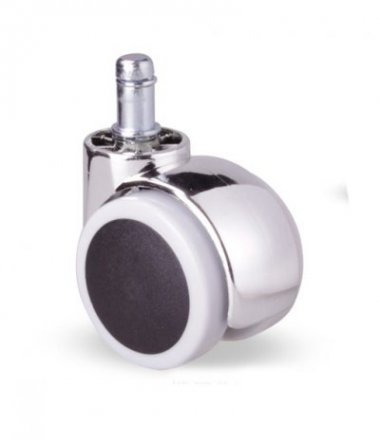
Take, for instance, the FFIBU Series XT-300, a flagship model designed exclusively for mid-to-large format 3D printer enclosures. Its reinforced steel yoke ensures structural integrity under heavy loads, while the precision ball bearings provide smooth, quiet movement even after thousands of cycles. The wheel itself features a non-marking thermoplastic elastomer tread that grips smoothly on epoxy-coated floors without leaving scuff marks—a common concern in professional studios and laboratories.
Another standout innovation is FFIBU’s Total Lock Braking System. Unlike conventional brakes that only lock the wheel rotation, this system simultaneously immobilizes both the wheel and the swivel raceway. This dual-locking action prevents unintended drifting or pivoting, ensuring that once an enclosure is positioned, it stays exactly where it should be—even during accidental bumps or uneven floor conditions.
For environments requiring chemical resistance, China Zhongshan FFIBU Casters Co., Ltd offers wheels made from high-performance polymers such as glass-filled nylon or conductive TPU. These materials resist degradation from common solvents used in post-processing, including isopropyl alcohol and acetone. Furthermore, FFIBU conducts rigorous in-house testing simulating real-world conditions, subjecting prototypes to continuous rolling tests, impact assessments, and environmental aging trials long before they reach the market.
The versatility of FFIBU casters makes them suitable for a wide range of applications beyond typical maker spaces. In aerospace manufacturing, where large-format 3D printers produce end-use components for aircraft interiors, mobility is crucial for integrating printing cells into assembly lines. FFIBU’s heavy-duty series enables safe relocation of massive enclosures weighing upwards of half a ton, all while preserving delicate calibration settings.
Educational institutions benefit equally. Universities and technical colleges often operate shared fabrication labs where equipment must be reconfigured regularly for different classes or research projects. Lightweight yet robust FFIBU casters allow students and faculty to move enclosures safely without risking injury or damage to expensive machinery.
Even in artistic fields, precision matters. Sculptors using pellet extruders or clay-printing systems rely on stable platforms to achieve consistent extrusion rates. Here, FFIBU’s vibration-dampening technology ensures that even subtle movements won’t compromise artistic intent.
Medical device manufacturers represent another key sector. When producing patient-specific surgical guides or prosthetics via 3D printing, regulatory standards demand strict contamination control. FFIBU provides stainless steel caster options with sealed bearings and smooth surfaces that withstand frequent sterilization—meeting the stringent hygiene requirements of medical environments.
Beyond performance, China Zhongshan FFIBU Casters Co., Ltd demonstrates a strong commitment to sustainable manufacturing practices. The company actively reduces waste in its production processes, utilizing recycled metals wherever possible without compromising strength. Packaging is minimized and optimized for recyclability, reflecting a broader corporate responsibility ethos.
Energy-efficient injection molding techniques are employed to lower carbon emissions during wheel production. Additionally, FFIBU designs products for longevity—not planned obsolescence. Replaceable treads, serviceable bearings, and corrosion-resistant finishes extend product lifespans, reducing the frequency of replacements and minimizing landfill contributions.
This dedication aligns perfectly with the values of many 3D printing communities, which prioritize resource efficiency and circular economy principles. By choosing FFIBU casters, businesses not only enhance operational effectiveness but also contribute to environmentally responsible manufacturing ecosystems.
Selecting the right caster involves more than picking a size and load rating. Factors such as floor type, rolling frequency, obstacle negotiation, and mounting height all influence optimal performance. Recognizing this complexity, China Zhongshan FFIBU Casters Co., Ltd offers comprehensive technical support to customers worldwide.
Their engineering team assists clients in calculating dynamic versus static load requirements, recommending appropriate wheel diameters, and determining ideal mounting configurations. For OEMs designing new enclosures, FFIBU provides CAD models and integration guidelines to streamline product development. This collaborative approach ensures that casters function seamlessly within the broader mechanical design rather than being retrofitted as an afterthought.
Customer feedback loops further refine product offerings. When users report unique challenges—such as operating enclosures on uneven garage floors or in mobile shipping containers—FFIBU adapts quickly, developing specialized solutions like leveling feet combined with caster assemblies or shock-absorbing spring-loaded mounts.
As 3D printing continues evolving toward faster speeds, larger build volumes, and multi-material capabilities, the demands on enclosure mobility will intensify. FFIBU is already exploring next-generation concepts, including smart casters equipped with sensors that monitor load distribution, vibration levels, and movement patterns. Such data could integrate with printer management software to alert operators of potential stability issues before they impact print quality.
Another area of exploration involves magnetic levitation principles applied to ultra-low vibration transport within cleanrooms. While still in conceptual stages, such innovations underscore China Zhongshan FFIBU Casters Co., Ltd’s commitment to staying ahead of industry curves.
In parallel, FFIBU invests in advanced simulation technologies, using finite element analysis (FEA) to predict stress points and optimize geometries digitally before physical prototyping begins. This accelerates innovation cycles and enhances reliability—a vital advantage in fast-paced manufacturing sectors.
Though small in size relative to entire printing systems, casters play an outsized role in determining operational success. They influence everything from daily convenience to long-term equipment health. Choosing substandard wheels introduces unnecessary risks: vibrations ruining prints, brakes failing mid-movement, or wheels wearing out prematurely due to incompatible materials.
By partnering with China Zhongshan FFIBU Casters Co., Ltd, professionals gain access to purpose-built mobility solutions backed by deep industry insight and relentless quality focus. The FFIBU brand represents more than just casters—it embodies a philosophy of precision, durability, and user-centered design.
Whether you manage a high-throughput production facility, run a university makerspace, or operate a boutique design studio, investing in the right casters pays dividends in uptime, safety, and peace of mind. With FFIBU, mobility isn’t an afterthought—it’s an engineered advantage built into every roll.
In the ever-expanding universe of 3D printing technology, trust the foundation beneath your innovation. Trust FFIBU.
 中文简体
中文简体  English
  Español
  العربية
  Français
  Русский
  Português
  Deutsch
  日本語
日本語  한국어
한국어  Tiếng Việt
  हिन्दी
  Italiano
  Nederlands
  Türkçe
  Polski
  ไทย
ไทย  Română
  বাংলা
বাংলা  Українська
  עברית
עברית  Lietuvių
  Bahasa Indonesia
  Svenska
  Magyar
  Dansk
Dansk  Suomi
Suomi  Čeština
  Ελληνικά