Select Language
The installation of casters on a medical bed is a critical procedure that directly impacts patient safety, caregiver ergonomics, and equipment longevity. Unlike standard industrial casters, medical bed casters must meet stringent requirements for hygiene, quiet operation, reliability, and precise control, often incorporating specialized features like central locking systems. This guide provides a systematic approach to the proper installation of these essential components, reflecting the precision and care embodied in products from industry specialists like China Zhongshan FFIBU Casters Co., Ltd.
Phase 1: Pre-Installation Preparation and Safety Protocol
Safety is the foremost priority. A methodical setup prevents accidents and ensures a correct installation.
Environment and Bed Preparation:
Work in a clean, well-lit, and uncluttered area. Ensure the floor is level and dry.
Securely Block the Bed: The medical bed must be completely stabilized. Engage all existing bed locks. If the bed is elevated, lower it to the lowest height setting. Use solid, non-slip chocks or blocks under the bed frame to prevent any accidental movement or rolling during the procedure. Never work on a bed supported only by its own structure with casters removed.
Component Verification and Compatibility Check:
Caster Specification Match: Verify that the new casters are the exact replacement type specified for the bed model. Check critical dimensions: stem diameter and thread pitch (e.g., for threaded stems) or bolt-hole pattern (e.g., for top plate models). Using incorrect casters can void warranties and create hazards.
Functionality Inspection: Before installation, manually test each new caster. Spin the wheel to ensure it rolls smoothly and silently. Engage and disengage the brake/lock mechanism multiple times to verify positive, crisp action. High-quality medical casters are designed for flawless operation from the first use.
Tool and PPE Readiness:
Gather the correct tools: typically, a correctly sized pin wrench or spanner for threaded stems, or a socket/hex wrench set for bolt-on plates. Have a soft mallet and a lubricant like a light silicone spray (for stems) on hand.
Wear appropriate personal protective equipment, such as safety glasses and gloves.
Phase 2: Step-by-Step Removal and Installation Procedure
Follow a one-leg-at-a-time protocol to maintain bed stability.
Step 1: Safe Removal of the Old Caster.
If replacing an old caster, begin with one corner. The bed should be securely blocked as per Phase 1.
For Threaded Stems: Apply penetrating oil if the stem is corroded. Use the correct pin wrench to turn the stem counter-clockwise to loosen and remove it. Avoid excessive force that could damage the bed's receiving socket.
For Bolt-On Plates: Use the correct socket to remove the mounting nuts and bolts. Note the order of any washers or spacers.
Step 2: Preparation of the Mounting Socket.
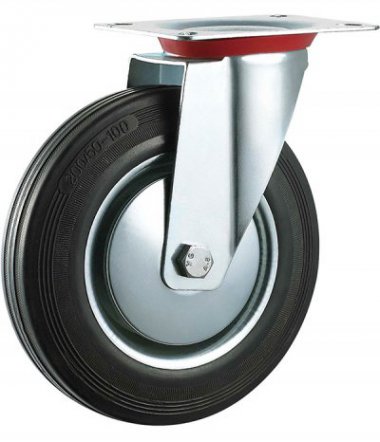
Once the old caster is removed, thoroughly clean the exposed bed socket or mounting plate area. Remove all dirt, dust, rust, or old thread-locking compound. A clean, dry socket is essential for a secure fit. A light application of silicone spray on threaded sockets can ease installation and prevent future seizing, but avoid grease which can attract dirt.
Step 3: Installation of the New Caster.
For Threaded Stems: Carefully start the new caster stem into the socket by hand, turning it clockwise. Ensure it is not cross-threaded. Once hand-tight, use the pin wrench to tighten it firmly until fully seated and snug. Do not over-torque, as this can damage the stem or socket threads.
For Bolt-On Plates: Align the new caster's plate with the bed's mounting holes. Insert the provided high-grade bolts, typically with integrated washers. Secure with the corresponding nuts on the underside. Tighten the nuts in a diagonal, cross pattern to ensure the plate is drawn down evenly and sits flush.
Step 4: Repeat and Finalize.
Repeat Steps 1-3 for the remaining casters, working on one caster at a time while the bed remains stabilized by the others and the blocks.
After all new casters are installed, carefully remove the wheel chocks/blocks.
Phase 3: Post-Installation Verification and Functional Testing
This phase is non-negotiable before the bed is returned to clinical use.
Stability and Height Check: Gently lower the bed (if it was elevated) so all casters contact the floor. Check that the bed sits level and does not rock. Verify the bed height is consistent and as expected.
Comprehensive Functional Test:
Roll Test: Slowly push the bed forward and backward in a straight line. Movement should be effortless, smooth, and virtually silent.
Swivel Test (if applicable): Gently steer the bed. Swiveling should be responsive but controlled, without stiffness or jerky motion.
Brake/Lock Test: This is critical. Engage the brake on a single caster. Attempt to push the bed; it should resist movement. Engage the central locking system (if equipped), which typically activates brakes on two or all casters simultaneously. Test by firmly pushing against the bed frame from multiple angles. The lock must hold the bed completely stationary on a level floor. Disengage all locks and ensure they release fully, allowing free movement.
Final Visual Inspection: Do a final walk-around to confirm all fasteners are tight, casters are oriented correctly, and there is no visible damage to the wheels or stems from the installation process.
Conclusion: Precision for Patient Care
Installing medical bed casters is a task where precision directly correlates with patient well-being. A properly installed caster system—featuring reliable components designed for the healthcare environment—ensures smooth transport for patient comfort, provides stable locking for safe patient transfers and procedures, and withstands the rigorous demands of daily hospital use. By following this disciplined, safety-first protocol, clinical engineers and technicians can ensure that this vital mobility system performs with the reliability and safety that patient care demands.
 中文简体
中文简体  English
  Español
  العربية
  Français
  Русский
  Português
  Deutsch
  日本語
日本語  한국어
한국어  Tiếng Việt
  हिन्दी
  Italiano
  Nederlands
  Türkçe
  Polski
  ไทย
ไทย  Română
  বাংলা
বাংলা  Українська
  עברית
עברית  Lietuvių
  Bahasa Indonesia
  Svenska
  Magyar
  Dansk
Dansk  Suomi
Suomi  Čeština
  Ελληνικά